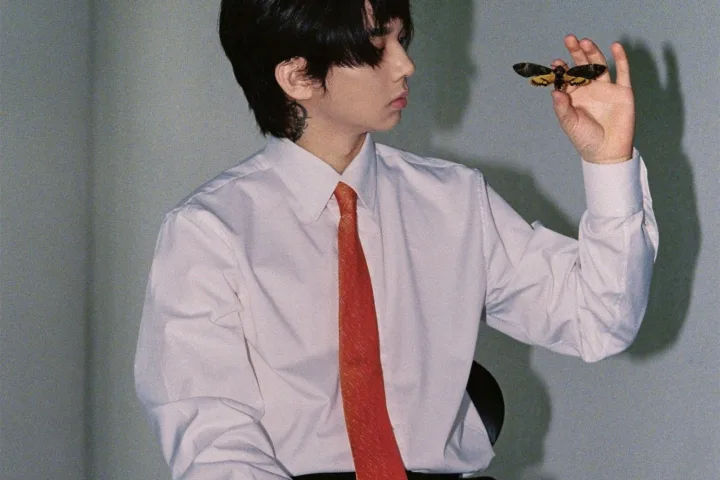

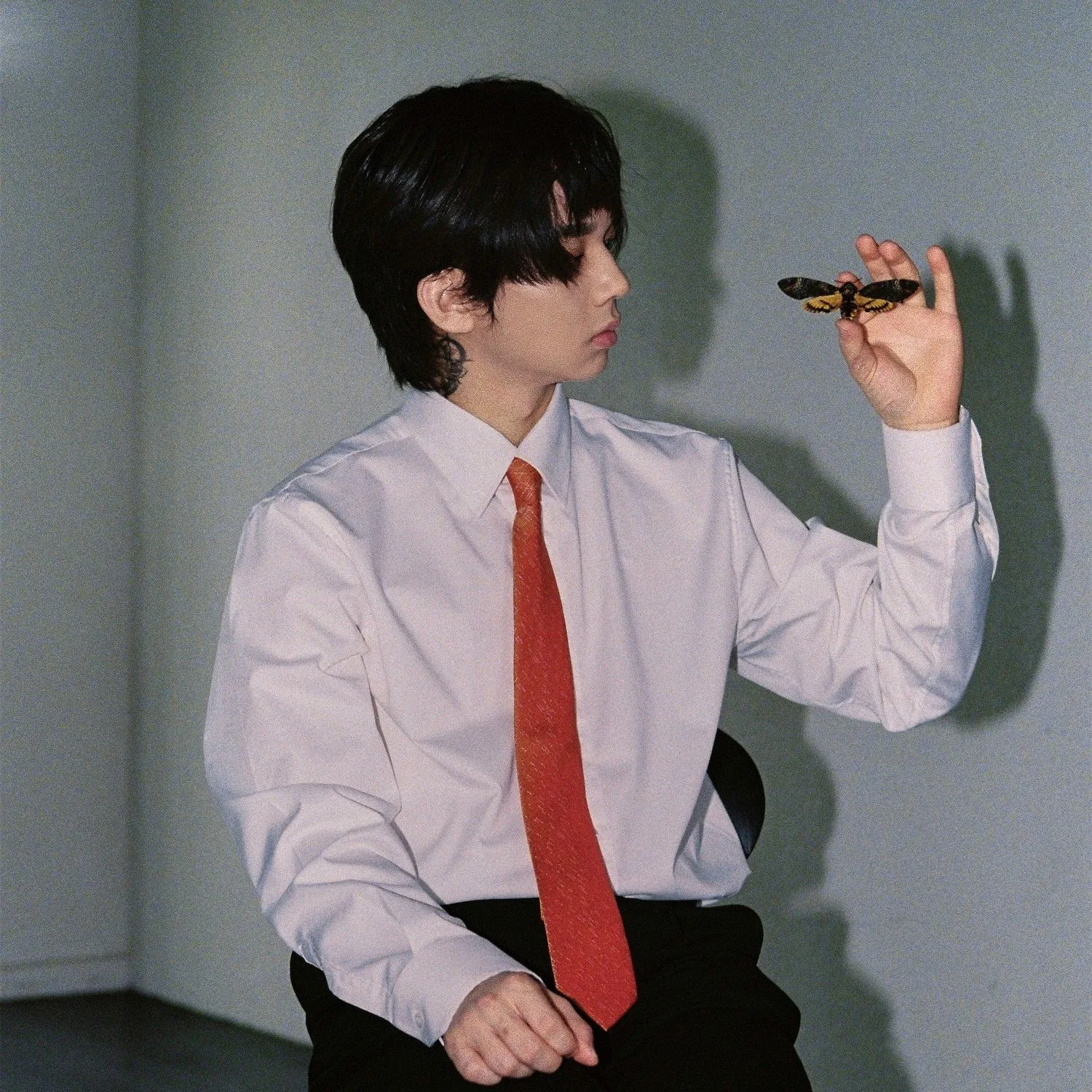
FireMoth is a singer-songwriter who recently came out with his mini-album ‘Inferno’. The July release really struck me and after reaching out he was kind enough to answer our questions.
He chose the name FireMoth because “Flying insects such as moths are known to mistake sources of light, such as streetlights or campfires, for the moon, circling around them until they are eventually burned by the heat. Isn’t that somewhat similar to the way humans pursue their goals, even when they know those goals may be unattainable?”
Inferno
“For this album, I did not intend to convey any particular message or imbue it with any deeper meaning. ‘Inferno’ is simply a depiction of a musician who set foot into the world of music driven by admiration, only to face failure, frustration, and self-destruction. It was never meant to be music that conveys a message; it simply “shows” these things as they are.”
FireMoth’s main inspirations for this album were Dante’s ‘Inferno’ and himself. “After all, this is my story, not someone else’s.”
The album opens with the track ‘Acheronte’ which is a reference to the river of pain, and the entrance to Hell in Greek mythology.
” I thought that the moment when a person gives up something they once loved is not all that different from standing at the gates of Hell. “Abandon all hope, ye who enter here.” It’s a famous line, isn’t it?”
“I worked on the album exactly in the order of the tracks, from beginning to end. I remember composing it less as if I were making an album and more as if I were writing a book.”
- It sounds like there’s a sonar in the instrumentation of ‘Acheronte’. What does that add to the meaning and depth of the track for you?
“When I place sounds in a track, I tend to focus less on the meaning of the music itself and more on the images that I want the sounds to evoke. The sonar-like sound you mentioned is a good example of that. I wanted it to sound as if Charon were slowly rowing his boat across the river of Hell.”
“The same goes for the other electronic elements in the track. I wanted to depict, in somewhat unconventional ways, the creaking deck of the ferry, the raging storm, and the sound of rippling water.”
- You wrote “Please spare even the pitiful deceiver”, apart from being a very evocative line, what does it signify for you?
“You have to look at the lyrics that come just before that line. They say, “Please do not remember me… Wait, actually, please do remember me.” I suppose you could call it the primal deception and selfishness of human beings—the desire to remain in someone’s memory, to continue to exist in some form, even while giving up everything else. I also personally like this line as well.”
Avare i prodighi
“‘Avari e prodighi’ refers to the circle of Hell reserved for the wasteful and extravagant in Dante’s Divine Comedy: Inferno. The man in the track is a sinner who is so blinded by the love he is capable of giving that he fails to see the love he has received, only to squander it almost immediately.”
“The song describes the value of love from the perspective of this sinner. Because of that, I felt that it could perhaps become one of the most important focal points of the album, which is why I chose it as the title track.”
- In ‘contro se stessi’ you write “Is there anything more terrible than self-awareness”. How do you stop yourself from being too self-aware? Is it something that you struggle with?
“As you said, this is something I still struggle with as well. Perhaps everyone in the world lives with a similar burden. I spent a lot of time trying to find an answer, and I think the solution is to be honest with yourself about your emotions and actions.”
“I think the reason we eventually go too far and become trapped in the depths of self-awareness is that we try to avoid the truth we already know deep down, wandering around in search of some grander meaning instead.”
IPOCRITI
The lyrics of ‘IPOCRITI’ are “something I had been saying to myself all along, I simply put those words into the song.”
- Can you tell us a little bit more about the writing process of the track?
“The process of gathering and arranging the sounds took quite a while. I personally recorded the sounds of the sea and forests in the rural areas of Jeju Island, South Korea, and for the guitar parts, I recorded everything analog from beginning to end without using any loops. There are also many other natural details hidden throughout the track.”
“In contrast, the lyrics depict life in the city. I wanted to capture the thoughts and perspective of a young musician who grew up in Seoul while carrying a longing for Korea’s traditional folk music.”
- I love how gentle the instrumentation sounds. What was the thought process behind that?
“Given that it’s a relatively long track, running 7 minutes and 40 seconds, I focused the entire composition process on one thing: making it as comfortable and easy to listen to as possible.”
“During the monitoring process after production, I felt that I hadn’t quite managed to achieve that as well as I had hoped. So I’m really glad to hear you say that.”
You can find FireMoth on Spotify here and on Instagram here. Go ahead and check out his full discography!